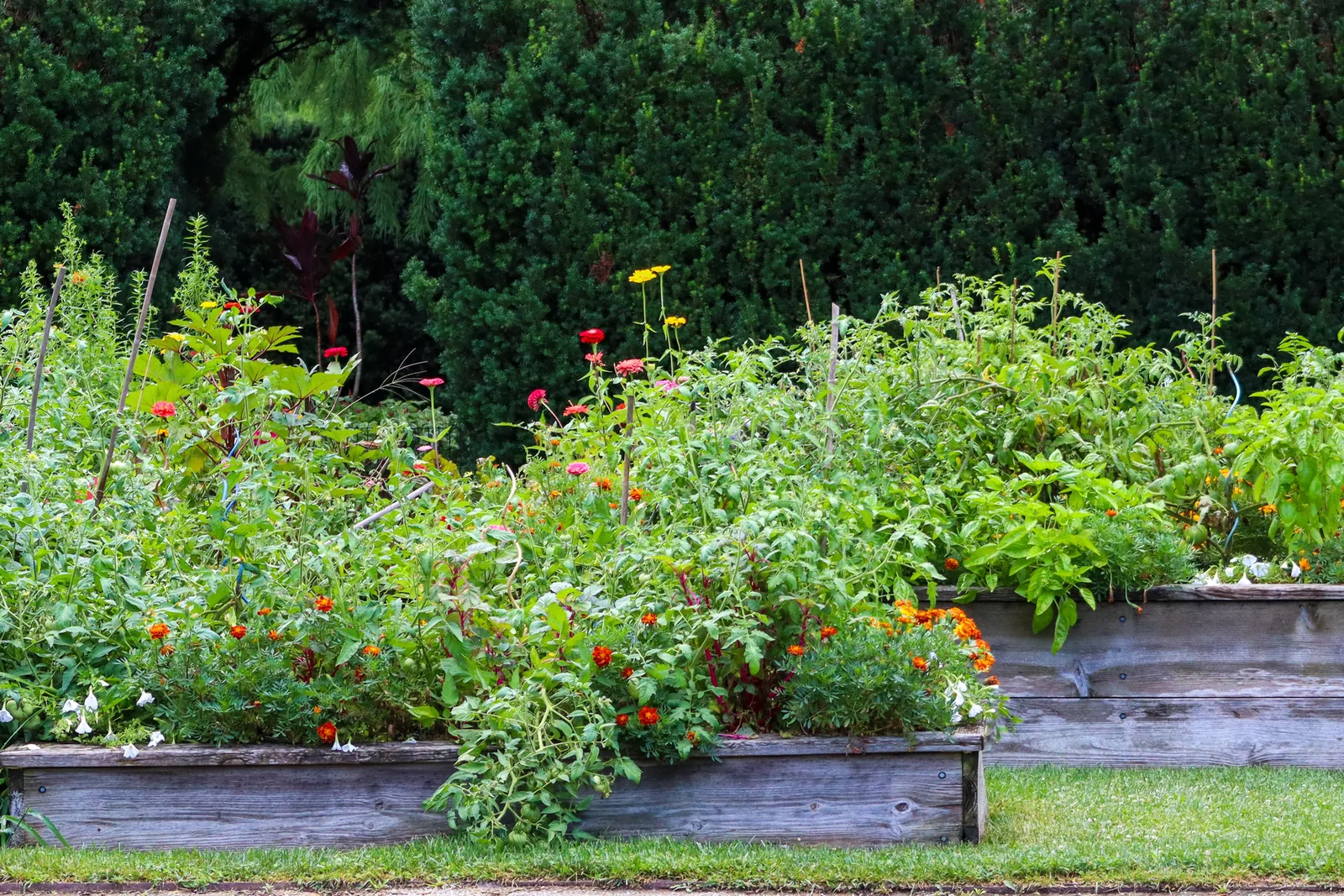
Raised beds on soil or concrete
An open-bottom bed over garden soil lets roots grow below the frame. On concrete, paving or a solid base, roots have only the soil inside the bed. That difference determines how much soil depth you need to provide.
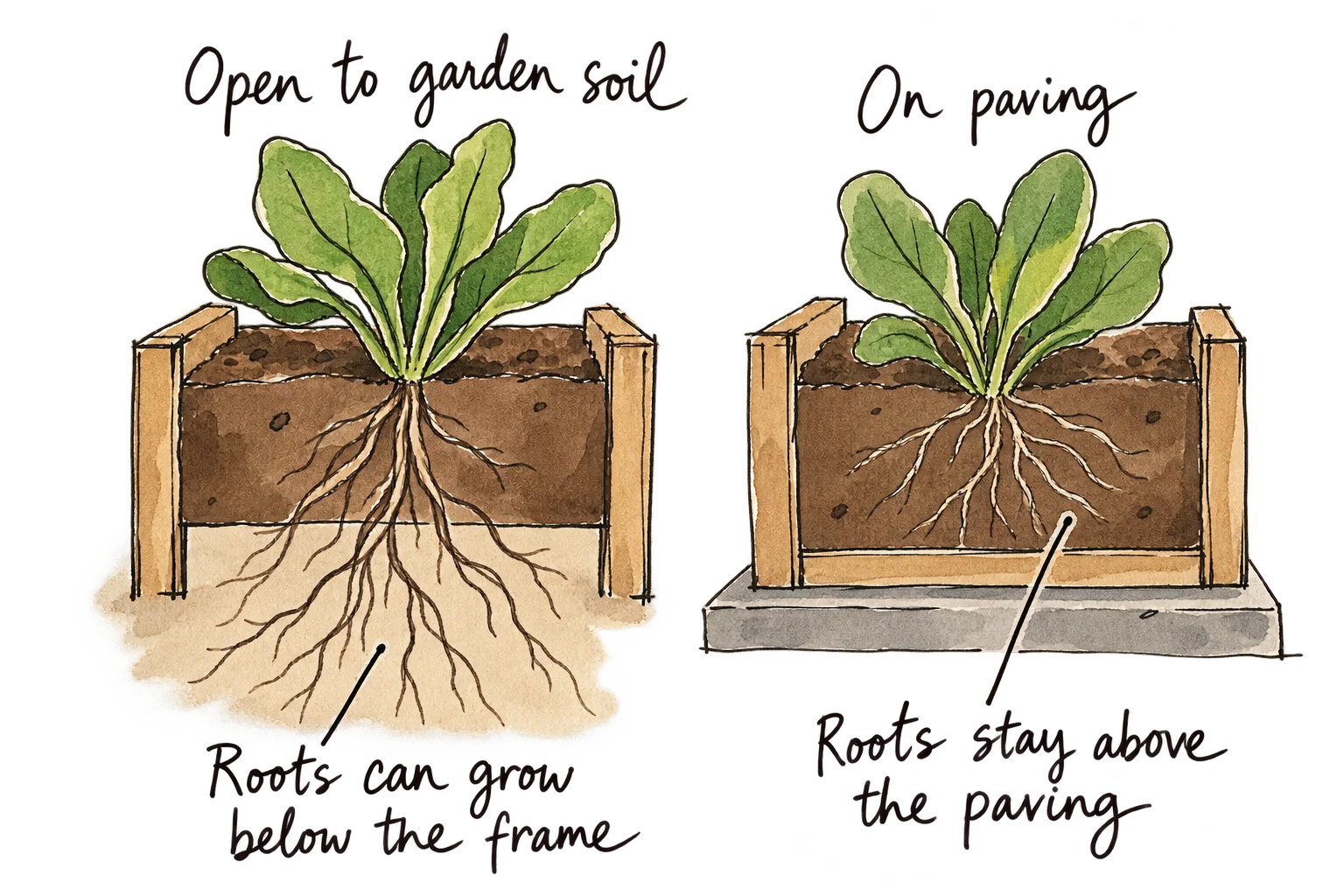
Prepare the soil beneath an open-bottom bed
Dig into the proposed bed area to check for compaction and poor drainage. Loose, well-drained soil beneath an open-bottom frame gives vegetables additional rooting space.
Clear grass and persistent weeds. Loosen compacted ground with a garden fork, working when it crumbles rather than smears. Mix the first few inches of new soil into that loosened surface so roots and water can move between them.
Compacted ground or an uncertain soil history?
Compacted soil may be improved; check it before counting it as root space. If contamination is a concern, ask your state’s university gardening service, Cooperative Extension, about soil tests and precautions for a food garden. Don’t mix suspect soil into the new fill while that question is unresolved.
Soil depth for vegetables on a hard base
For a bed on concrete or another hard, impermeable base, use the vegetable groups below to choose the depth of growing mix. Allow extra height above the soil for mulch.
| Vegetables | Depth of mix |
|---|---|
| Leafy greens, beans and cucumbers | At least 8 inches |
| Peppers, tomatoes and squash | 12–24 inches |
Depth requirements for other vegetables
For vegetables outside these groups, check the variety’s growing instructions before choosing a bed depth. These figures apply to beds on hard surfaces; roots in an open-bottom bed can also enter suitable garden soil below.
Allow space above the soil for mulch
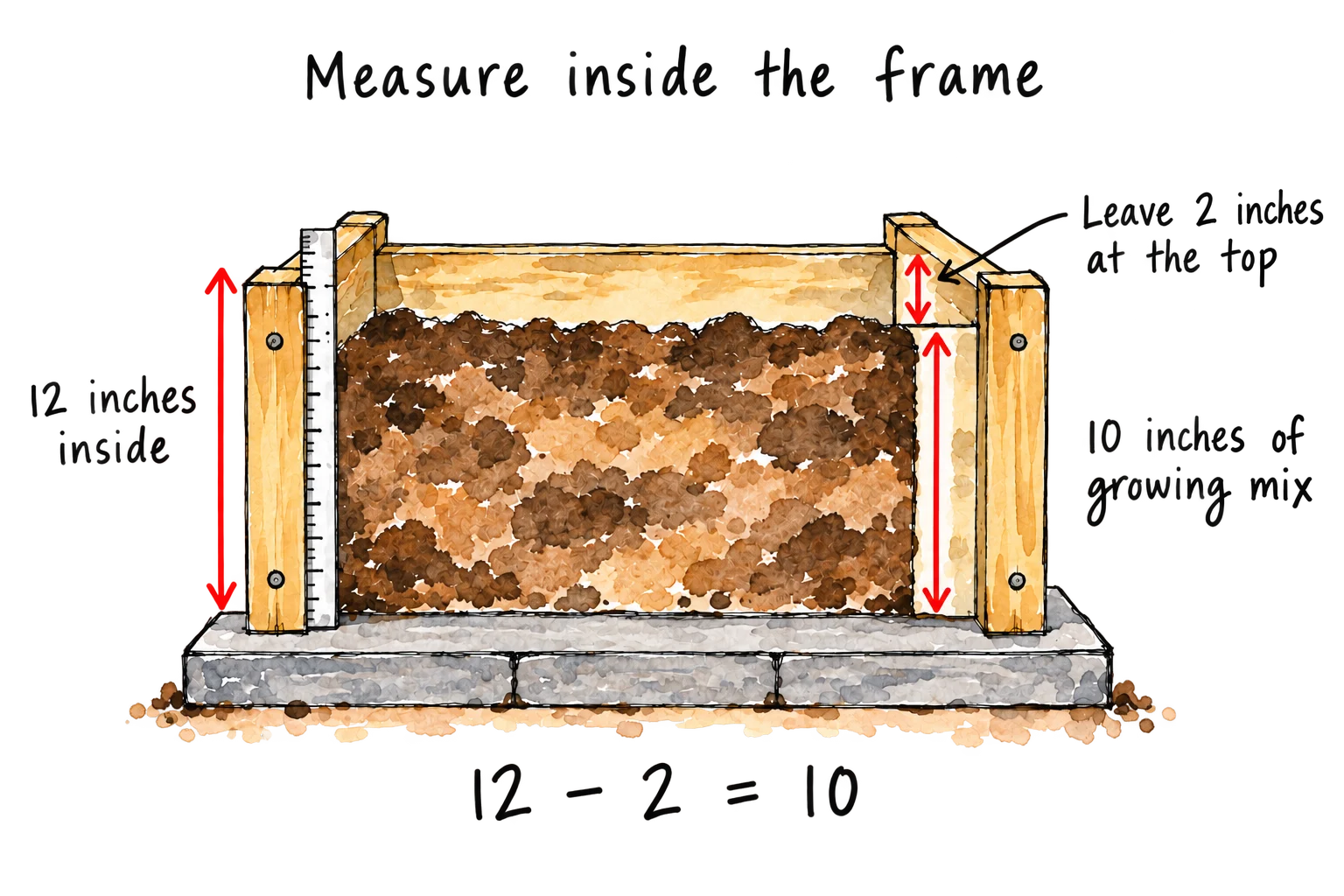
Measure down from the finished soil surface to the first layer roots cannot enter. Leave 1–2 inches at the top for mulch and allow for fresh fill to settle.
A frame with a true 12-inch interior and 2 inches left at the top holds 10 inches of mix. On concrete, that falls short of the range for peppers, tomatoes and squash. Check the actual inside dimensions before buying.
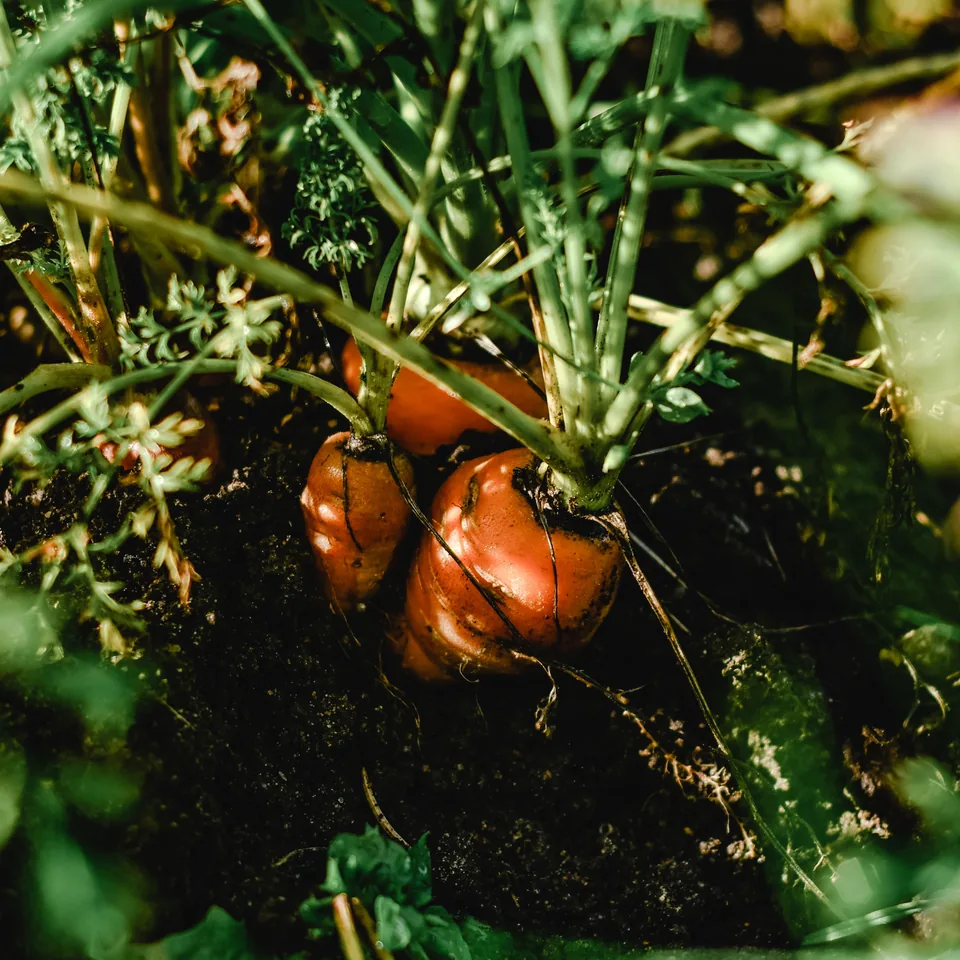
Allow enough depth for full-length carrots
For a bed over a hard base, allow mix at least 1 inch deeper than the carrot’s expected mature length. Check the seed packet: a short or round carrot fits a shallower bed more easily than a long storage variety.
That allowance accommodates the thick carrot root you harvest. Fine feeding roots can extend farther into suitable garden soil below an open-bottom bed.
Bed width and comfortable working height
Once the plants have enough soil, choose the working height for you. Taller sides can reduce bending, but width decides whether you can reach the middle to sow, weed and harvest.
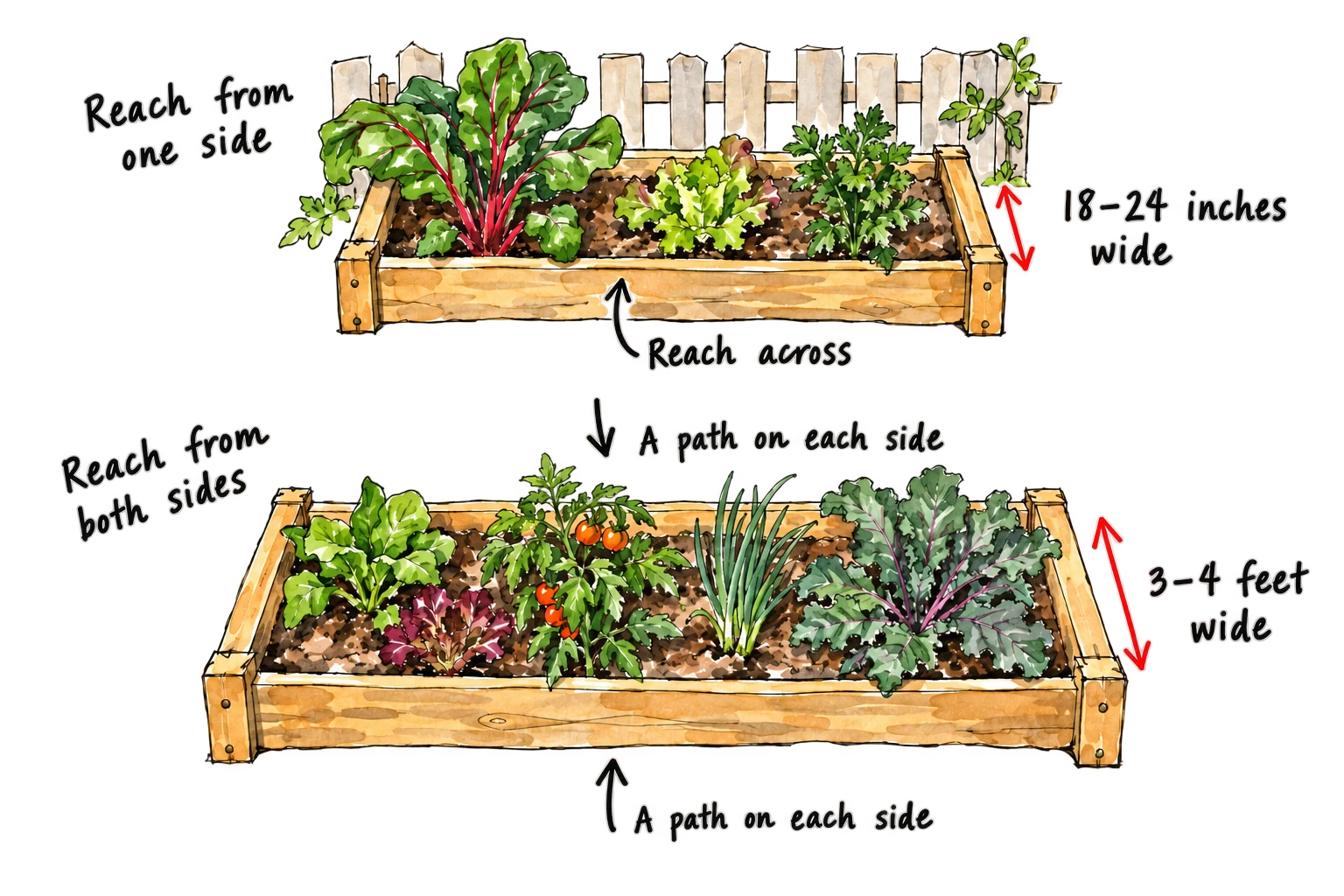
18–24 inches wide beside a fence
Beside a fence or wall, start with a narrow bed you can reach across. Reduce the width if the back feels awkward.
3–4 feet wide with paths on both sides
With a path along each long side, you can tend each half from its nearest edge without stepping on the soil.
Test your reach at the planned bed height
Mark the edge and center on a table or temporary mock-up at your planned height. Sit or stand as you would to garden, then reach to each mark. Include the top ledge: a wide edge puts the plants farther away.
Try moving your wheelbarrow or cart around the marked-out bed, too. Leave yourself a comfortable way to work around it.
Soil mix, drainage and watering
Raised beds need a clear drainage route as well as enough soil. Choose a suitable growing mix and a location you can reach with a hose or watering can.
Keep drainage outlets clear
On paving, keep drainage outlets clear. Avoid trapping water against a building or blocking a drain, and don’t seal the bottom with an impermeable liner.
Soil mixes for open-bottom and elevated beds
For an open-bottom bed over garden soil, a loose, well-drained topsoil-and-compost blend can extend the growing area. Mix it into the loosened soil at the base.
For a bed on concrete or legs, choose a mix suited to that container-like setting. The bed-filling advice in our starter guide explains an option using plant-based compost and soilless mix. Check with the supplier that the mix suits your planned depth, and check its ingredients before adding fertilizer.
Watering beds on paving
A bed on concrete cannot draw moisture from the ground below, and paving can add heat. Keep watering within easy reach. Check the mix more often in hot, dry weather and water when it needs it.
Support the weight of wet soil
Wet soil is heavy. Long or tall frames may need reinforcement; beds on legs need a base that supports the soil, water and plants.
Before placing a filled bed on a deck or roof, have a qualified local professional check that the structure can support its weight.
Calculate the volume of soil to order
Measure the inside length and width, then the depth of mix you’ll add. Use fill depth rather than frame height, and leave out the soil already beneath the bed. For a top-up, enter only the depth you’re adding.
For a 4 × 8-foot interior, 12 inches of fill takes 32 cubic feet; 24 inches takes 64 cubic feet. Ask the supplier about settling and delivery before placing your order.
Sources & further reading+
Authoritative references used in this guide:
- University of Maryland Extension — Growing Vegetables in Raised Beds
- Colorado State Extension — Block-style Raised-bed Layout
- Oregon State Extension — Raised Bed Gardening
- Iowa State Extension — Creating Raised Bed Planters
- South Dakota State Extension — Raised Beds and Containers
- Rutgers Cooperative Extension — Soil for Raised Beds