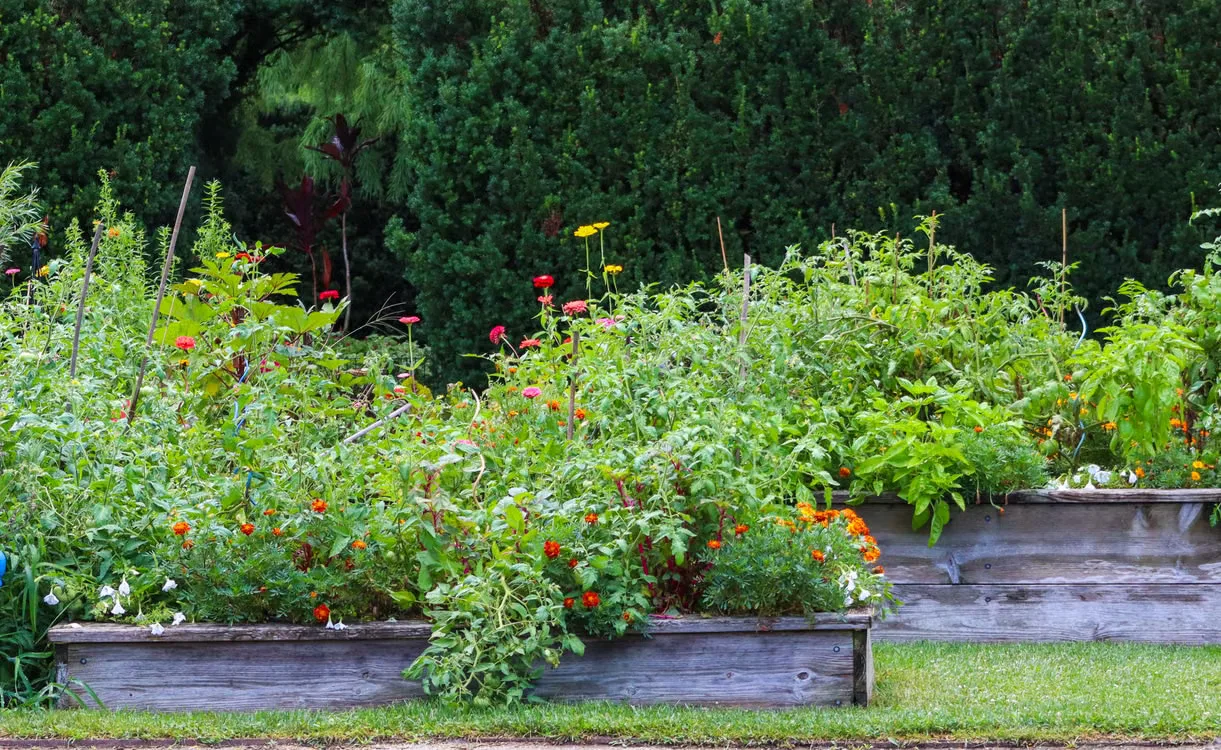
Beds on garden soil
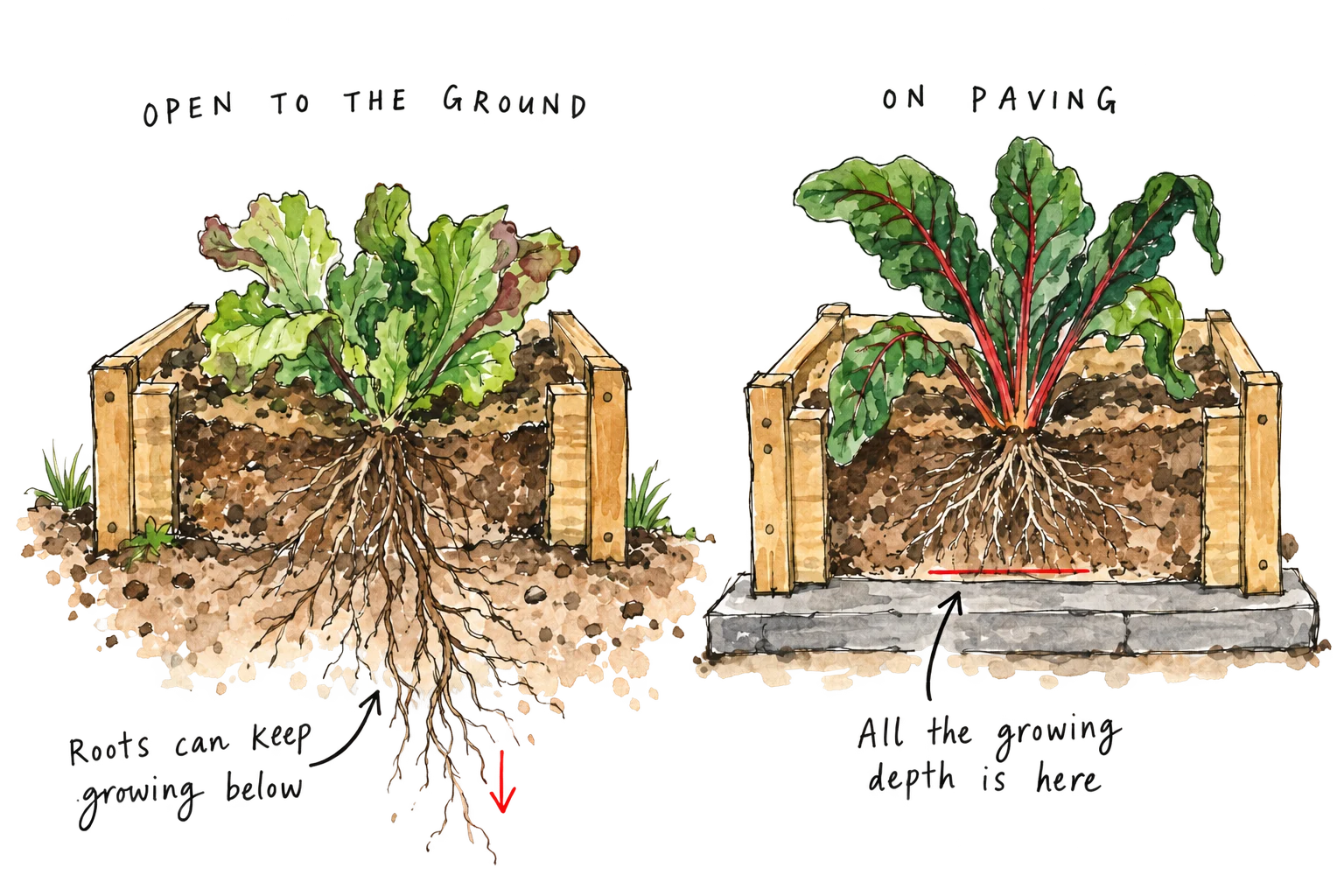
A raised bed doesn’t have to hold the whole root system. If it sits on good garden soil, roots can grow down into the ground. That’s why a 10–12-inch bed can be enough without buying a much taller frame and the extra soil to fill it.
Prepare the ground before setting the frame
- Remove grass and persistent weeds from the bed’s footprint.
- Loosen compacted ground with a garden fork, easing it in and rocking the handle. Work when the soil crumbles rather than smears.
- Blend a shallow layer of the new mix into the loosened surface before adding the rest. This helps roots and water move between the two soils.
If the ground stays waterlogged, sort out the drainage before counting it as growing space. Taller sides alone won’t fix the soil underneath.
Beds on concrete or paving
On concrete or paving, or in a planter with a solid bottom, depth matters more. The plants depend on the soil you put inside. These are starting depths for the vegetables listed:
| Vegetables | Depth of growing mix |
|---|---|
| Leafy greens, beans and cucumbers | At least 8 inches |
| Peppers, tomatoes and squash | 12–24 inches |
If you’re growing several vegetables together, allow enough depth for the ones that need the most space. Within the 12–24-inch range, check recommendations for your chosen varieties. Other crops may need a different depth.
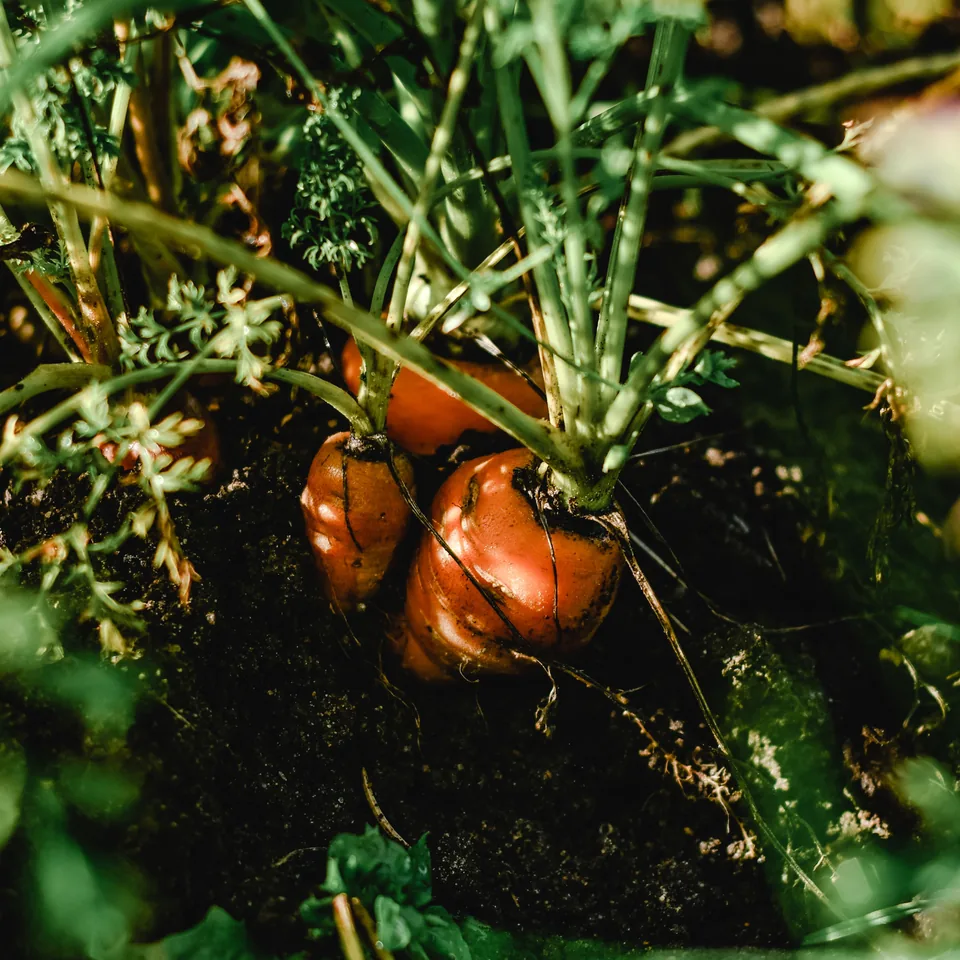
Carrot varieties and soil depth
Carrots need room for their mature roots. For a bed on paving, allow soil at least 1 inch deeper than the mature length listed on the seed packet. Short or round varieties are useful if your bed is shallow.
Their fine feeding roots can grow farther than the carrot itself, including into the ground beneath an open bed.
Soil depth and space for mulch
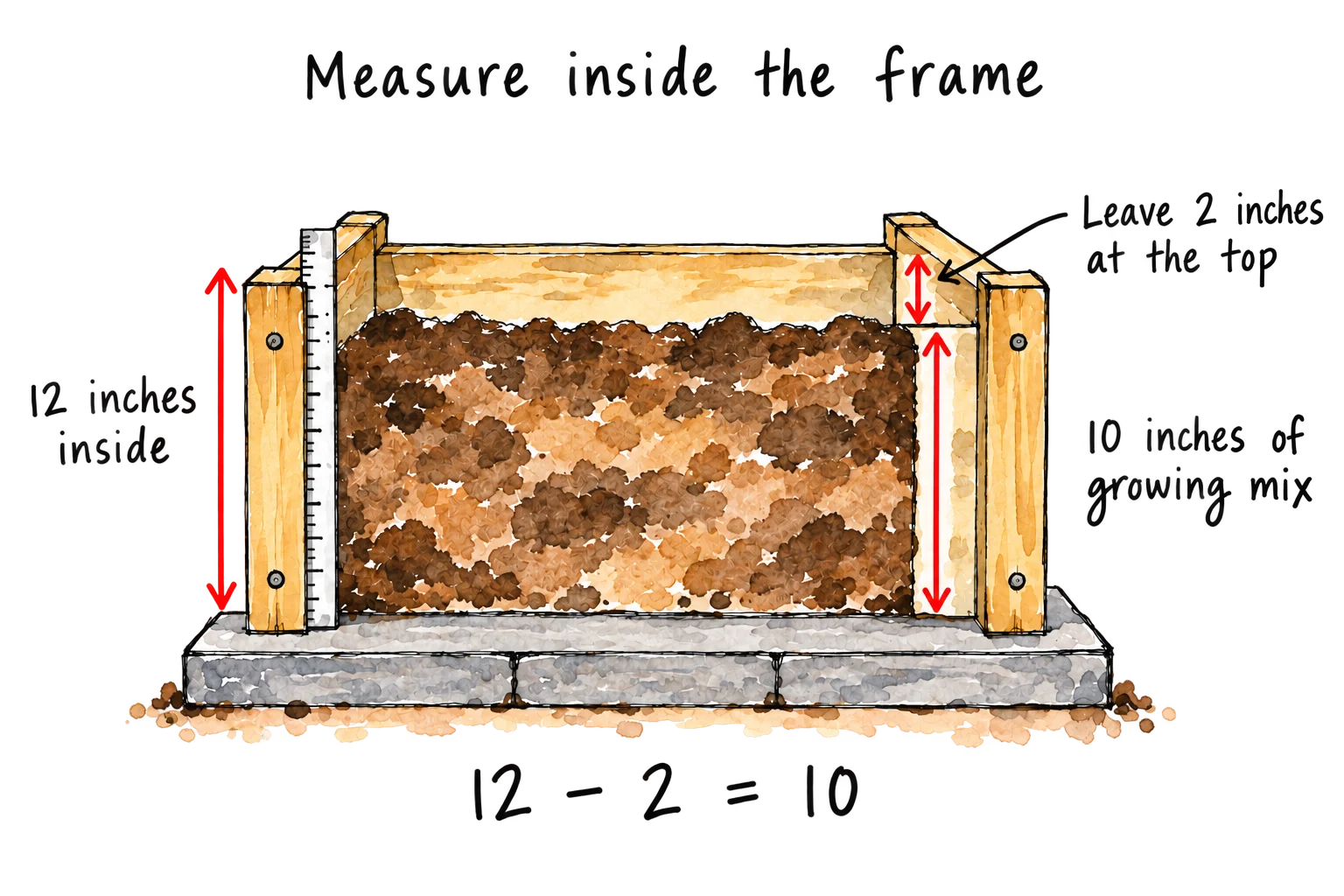
Leave 1–2 inches at the top for mulch. A bed measuring 12 inches inside, with a 2-inch gap above the soil, gives you 10 inches of growing depth. Fresh soil settles, so you may need to top it up.
On concrete, that’s enough for the shallower crops in the table, but less than the 12–24 inches recommended for peppers, tomatoes and squash. For a planter on legs, measure the soil compartment; the legs don’t add growing depth.
Bed height and width
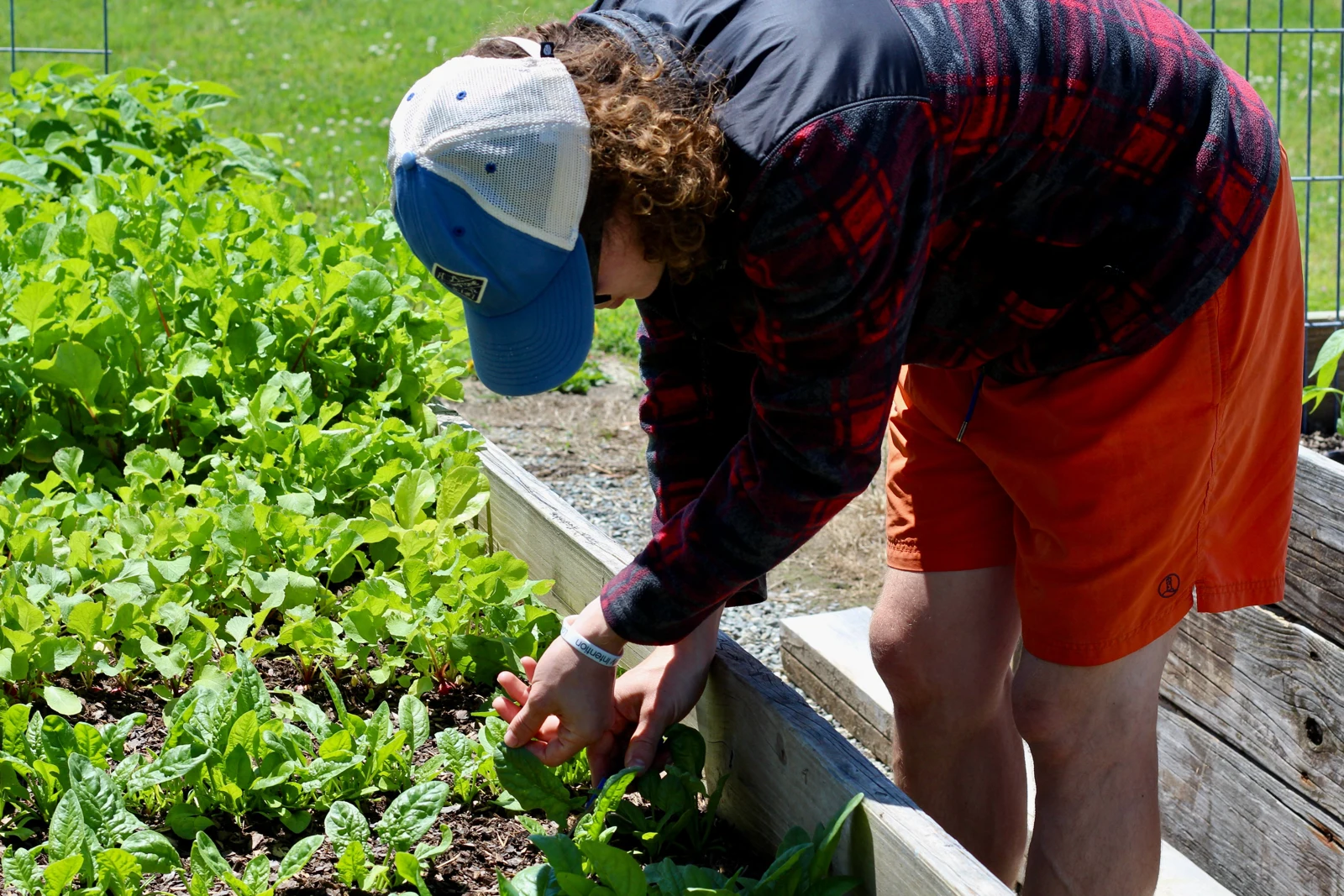
A taller bed can save you some bending and kneeling. That’s a reason to buy one even when the plants don’t need the extra depth. Just include the extra soil in your budget.
Bed width
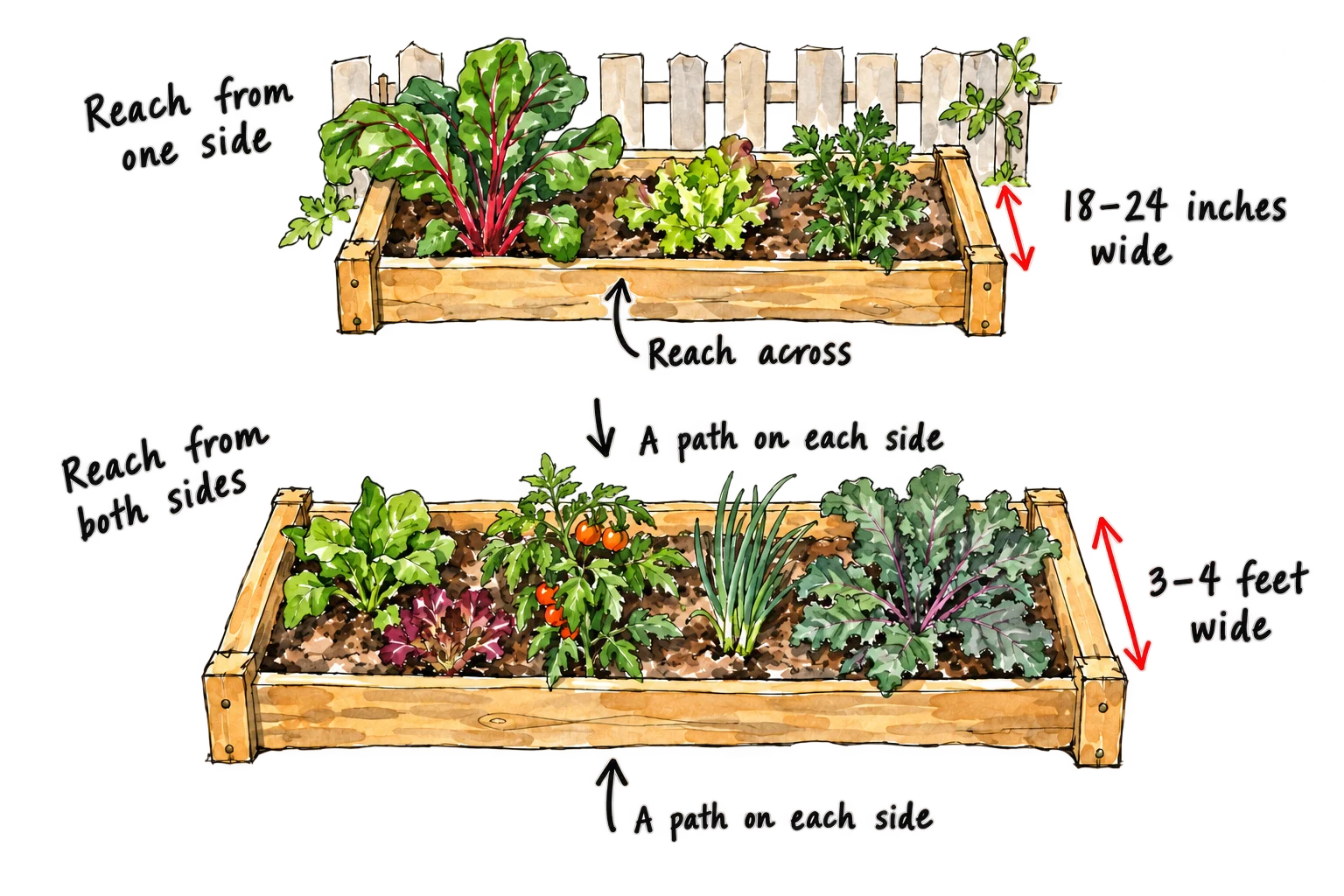
A bed beside a fence can be 18–24 inches wide. If you can work from both long sides, 3–4 feet wide is a useful starting point. Make it narrower if that’s more comfortable, and remember that a wide top ledge puts the planting farther away.
Leave enough space between beds for your cart or wheelbarrow.
How much soil do you need?
The amount of soil adds up quickly: a bed filled 24 inches deep takes twice as much as the same bed filled 12 inches deep. Price the soil and delivery along with the frame before deciding on the height.
Use the calculator below with the bed’s inside length and width, and the depth of soil you’re adding. For a top-up, enter just the extra depth. Don’t include the ground beneath an open bed.
The estimate doesn’t include extra soil for settling. Ask the supplier how much to allow and whether delivery can get to your garden. Our wood and metal bed comparison covers the frame options.
Soil and drainage
For a bed on garden soil, a well-drained blend of topsoil and compost can work well. A supplier should be able to tell you what’s in the blend and whether it’s suitable for vegetables.
For a bed on concrete or a planter with a bottom, use a mix suitable for containers. One option is equal volumes of compost and soilless potting mix. Our bed-filling guide explains the materials.
Some mixes already contain fertilizer, so check before adding more. If you send a sample for testing, tell the testing service whether it’s topsoil or a soilless potting mix.
Drainage and watering
- Keep drainage holes clear. Avoid a watertight bottom liner, and make sure water can drain away without collecting against the house.
- Beds on paving may need more frequent watering, especially in hot weather. Put them where you can water easily.
- Feel the soil before watering. How quickly it dries matters more than a fixed weekly schedule.
For a bed on good garden soil, start by looking at 10–12-inch frames. For a bed on paving, choose the soil depth for your vegetables first. Once you’ve settled on the size, the calculator will help you price the soil.