What does an aphid look like?
Look for a small, soft, pear-shaped insect, often about 2–4 millimeters long. Aphids can be green, yellow, brown, black or other colors. Some have wings, and some are covered in wax. Color alone is a poor guide.
What aphids look like on the plant
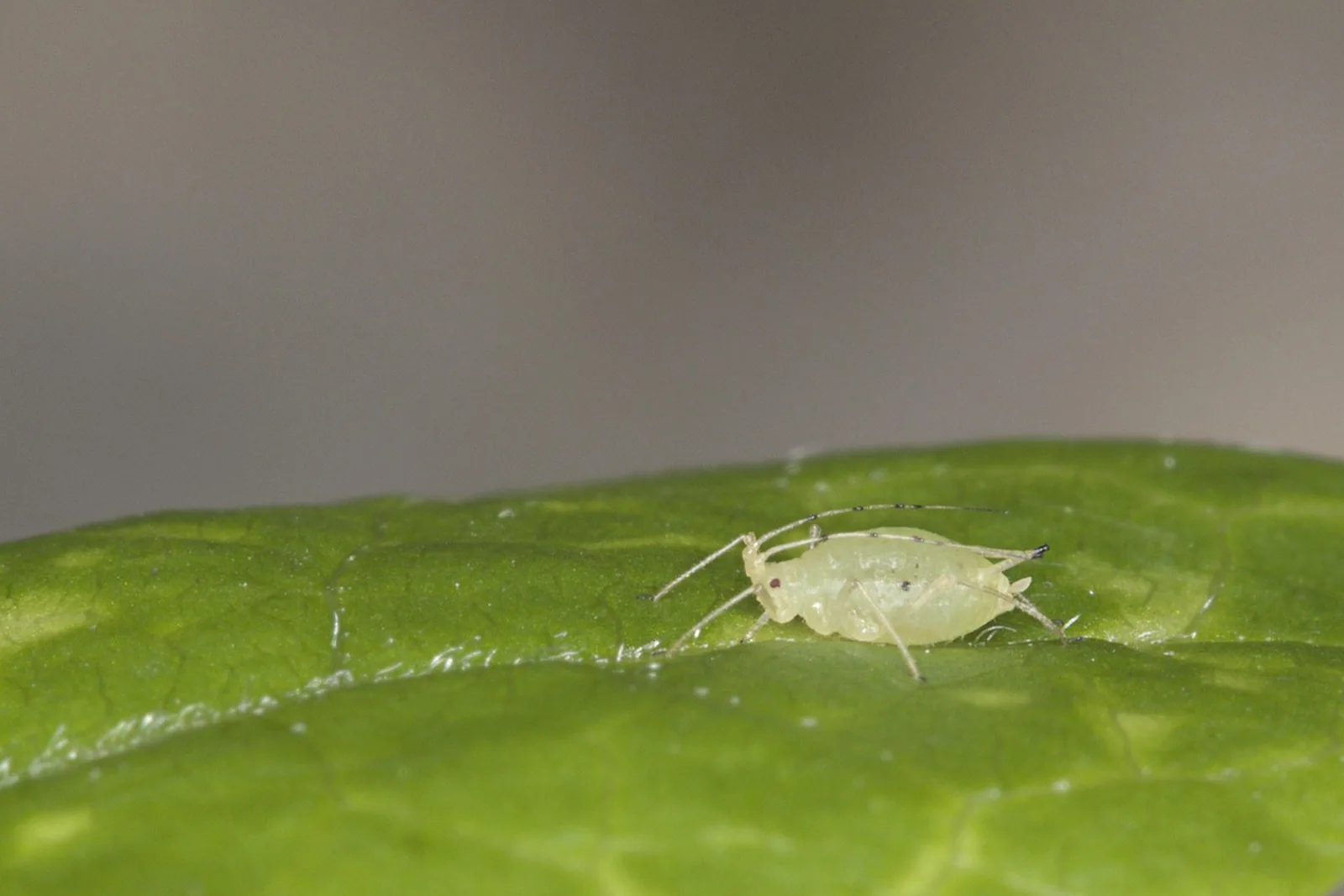
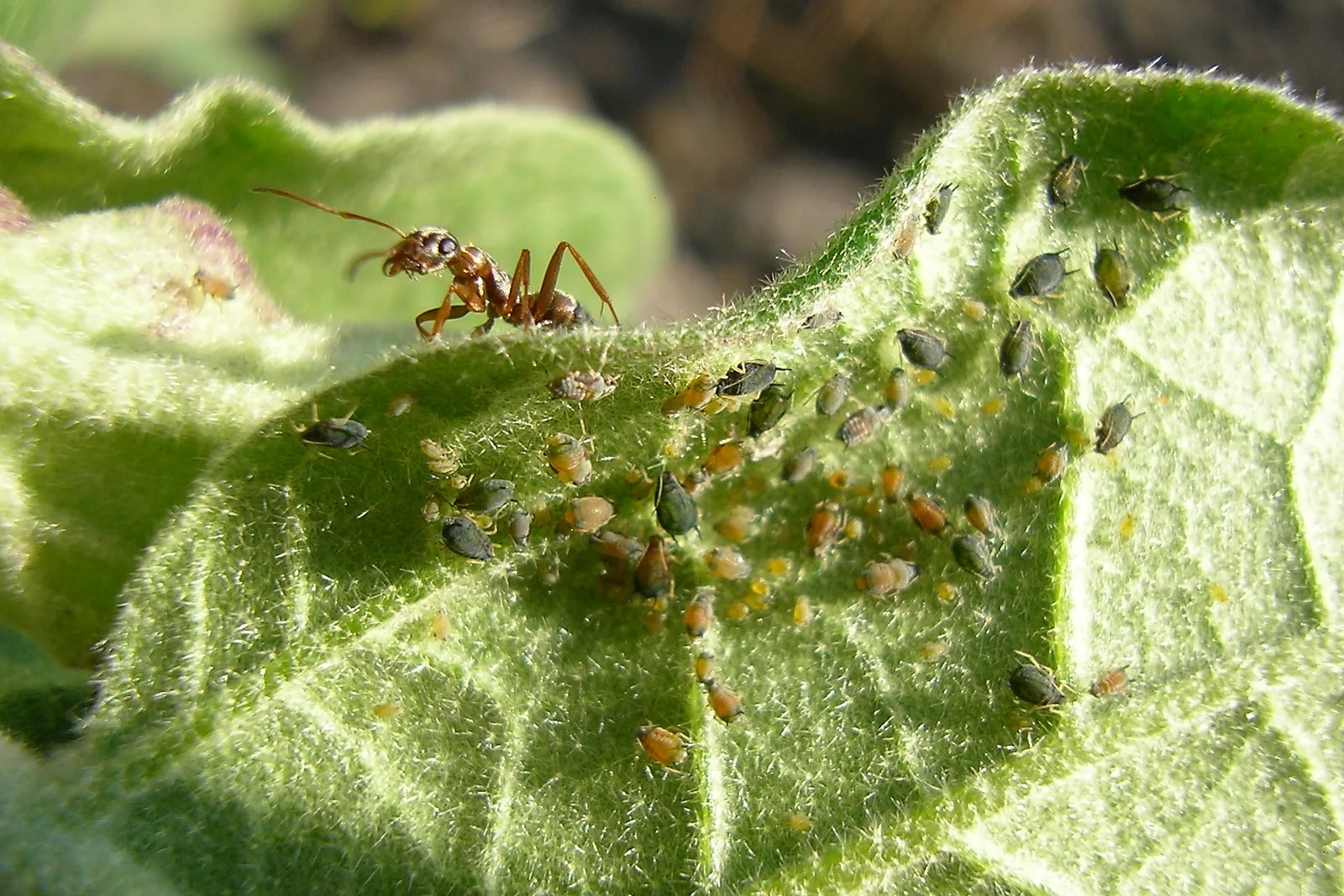
- Look at the bodySoft and pear-shaped
- Find the rear tubesTwo tiny tubes near the back; these are called cornicles
- Check soft new growthOften grouped on shoot tips, buds, stems or leaf undersides
- Find empty skinsWhite hollow shells beside live aphids
- Feel for stickinessAphids leave a sweet, sticky liquid called honeydew
- Open curled leavesCurling is a reason to look, not proof of aphids
- Look for aphid-eatersThey may be helping; check the same leaves again in a few days
Use several clues together. Ants, sticky leaves, curling or one ladybug cannot tell you by themselves whether aphids are the problem or whether you need to act.
Two tiny tubes near the rear of the body, called cornicles, are a useful identifying feature. A hand lens or a sharp close-up photograph helps you see them. Wax can obscure these features on woolly forms, so don’t force an identification when the body isn’t visible.
Turn over young leaves and inspect buds, stems and tender shoot tips. A group of similar insects feeding together is easier to notice than a single aphid.
Sticky leaves and white skins are supporting clues
Aphids release sticky honeydew, which can attract ants and support black sooty mold. You may also see pale, empty skins left as the insects grow. Check for live aphids among those skins before deciding the colony is still active.
Distorted leaves can remain after the insects have gone. Examine the newest growth as well as older damage, and inspect the underside of a curled leaf gently enough to avoid tearing it.
Check similar-looking insects
| What you find | Another possibility | What to examine |
|---|---|---|
| Tiny white, winged insects that rise when disturbed | Whiteflies | Look underneath leaves for adults and flatter young stages |
| Small bumps attached to stems or leaves | Scale insects | Older stages often stay fixed in place; young crawlers can move |
| Very tiny oval specks with pale stippling on leaves | Spider mites | Use magnification; fine webbing can help when present |
| Slender, moving insects with silvery feeding damage | Thrips | Look for narrow bodies rather than the rounded aphid shape |
| White waxy or cottony clusters | Mealybugs or woolly aphids | Examine the insect beneath the wax before choosing treatment |
If you can’t distinguish the insect, take photographs of the whole plant, an affected shoot and the closest clear insect view you can manage. Your county’s Cooperative Extension service—the university-supported local gardening advice service—can help identify it. Clear plant context is useful alongside the close-up.
Decide whether the plant needs treatment
On an established, otherwise healthy plant, a small colony can often be watched first. Mark two or three affected shoots and compare them over the next few days. Look for more live aphids, expanding damage or aphid-eating insects arriving.
Young seedlings and stressed plants have less growth to spare. If a colony is increasing and new leaves are becoming distorted, start with physical removal suited to the plant: rub off a few insects, rinse a sturdy shoot or prune a heavily infested tip that the plant can afford to lose.
There isn’t one useful aphid count that applies to every plant. The plant’s condition, the amount of vulnerable new growth and whether the colony is increasing are more helpful than trying to eliminate every insect.
Look beyond the affected shoot
Some aphids can transmit plant viruses. Mottling, rings, unusual distortion or stunting need a wider diagnosis; those symptoms don’t establish a virus or prove that aphids caused it. A spray cannot cure a plant virus. Seek crop-specific advice when the whole plant shows unexplained symptoms.
Rinse or remove the colony, then check again
For a sturdy plant, support the shoot and use a firm stream of plain water to dislodge aphids, including those underneath the leaves. Avoid blasting delicate seedlings or damaging soft stems. Choose a time when the foliage can dry afterward.
A few insects can be rubbed away gently. Pruning can help with a concentrated colony on growth the plant can spare, but removing a large part of a small plant may do more harm than the aphids.
Recheck the marked shoots after the plant has recovered and again over the following days. Repeat physical removal if live aphids remain and the plant tolerates it.
Judge progress by fewer live insects, a shrinking colony and healthier new growth. Old curled leaves may stay curled even when the problem is under control.
Recognize insects that eat aphids
Lady beetles and their young, lacewing larvae, hoverfly larvae and tiny parasitic wasps can help reduce aphids. Their immature forms may look very different from the familiar adult insect, so pause before removing every unfamiliar creature beside the colony.
A swollen tan or golden aphid may be an aphid mummy left by a parasitic wasp. Look for these and active predators while checking the marked shoots. Their presence is encouraging, although the colony’s trend over several days tells you more than one sighting.
Avoid unnecessary broad-spectrum treatments that can kill these helpful insects. Excess nitrogen can also encourage the soft growth aphids favor; follow the plant’s actual fertilizer needs. If ants are repeatedly tending a colony, seek advice suited to the plant and site about managing that activity.
When to consider insecticidal soap or horticultural oil
Consider a suitable product when you’ve confirmed aphids, the plant is being harmed and physical removal hasn’t provided enough control. Insecticidal soaps and horticultural oils act through contact, so insects protected inside tightly curled leaves may be difficult to reach.
Use a product labeled for the plant, pest and location. Read the current label before use and follow its directions for application, protective equipment, weather conditions, pollinators, re-entry, harvest intervals and repeat treatments. Product availability and permitted uses can vary by state. Follow applicable state restrictions as well.
Don’t substitute a homemade dish-detergent mixture. Household products aren’t equivalent to a labeled insecticidal soap and can injure plants.
After any treatment, return to the same marked shoots. You want fewer live aphids and improving new growth, with as little unnecessary disturbance to the rest of the garden as possible.
Sources & further reading+
Authoritative references used in this guide: